As sustainability transitions from a corporate trend to a global supply chain imperative, consumers and brands alike are looking closer than ever at the origin of their materials. Today’s market demands proof, not just promises.
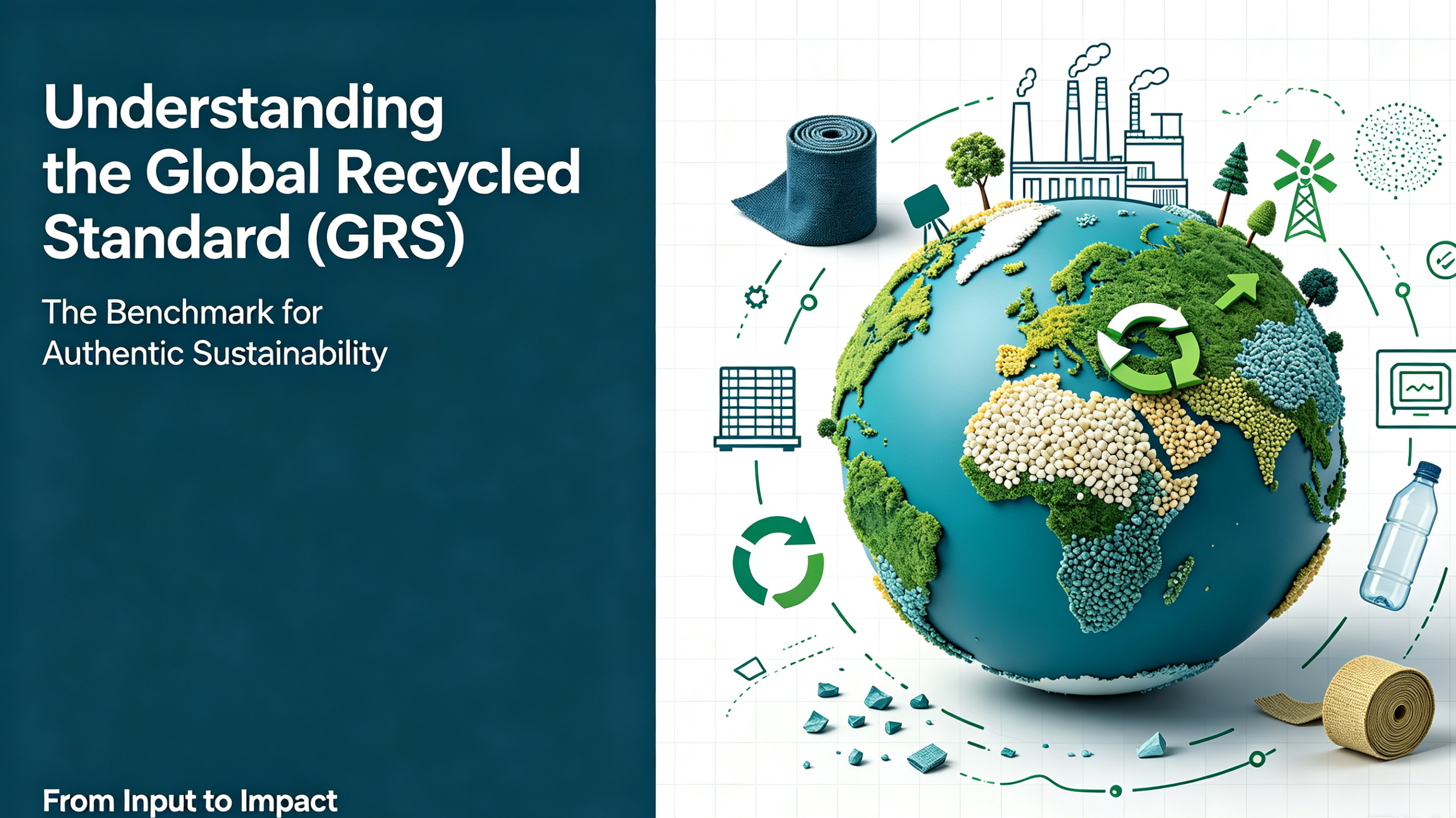
When it comes to verifying recycled content and responsible manufacturing, one of the most trusted and globally recognized benchmarks is the Global Recycled Standard (GRS).
GRS at a Glance
Managed by the Textile Exchange, the Global Recycled Standard is an international, voluntary, full-product standard. While its roots are in the textile industry, GRS is now applied across various sectors to verify the integrity of recycled materials.
The standard is built on three core pillars:
- Material Verification: Confirming that the recycled content is authentic and accurately tracked from source to final product.
- Responsible Production: Ensuring manufacturing facilities meet strict environmental and social welfare standards (such as fair labor practices and safe working conditions).
- Chemical Restrictions: Eliminating harmful chemicals in the processing of recycled materials to protect both human health and the planet.
The Core Requirements: 20% vs. 50%
To achieve GRS certification, products must meet strict composition thresholds: - To be Certified (20% Minimum): A product must contain at least 20% recycled material to qualify for GRS certification within the supply chain.
- To use the Logo (50% Minimum): If a brand wants to display the official GRS logo on consumer-facing packaging or marketing, the product must contain at least 50% recycled material.
The Takeaway: GRS is more than just a label—it represents a rigorous commitment to transparency, total traceability, and responsible production throughout the entire product lifecycle.