Industry Insights & News
Stay ahead with RePlastic Global’s expert analysis on plastic circularity, recycling trends, and sustainable material innovations. Explore our latest articles.
Latest Industry Insights
Explore the latest trends and innovations in plastic recycling and sustainability.
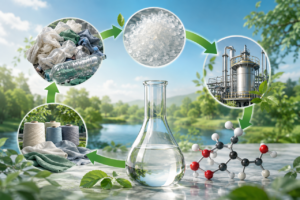
Closing the Loop: How R-PET Pellets are Driving the Circular Economy
Explore how R-PET pellets from RePlastic Global are helping businesses achieve their circular economy goals.
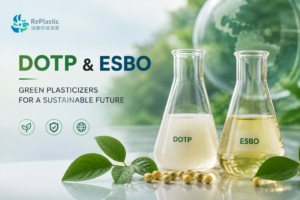
Bio-plasticizers: The Eco-Friendly Alternative for Flexible Plastics
Discover the benefits of bio-plasticizers and how they contribute to a more sustainable plastic industry.
R-PET Flakes: Achieving High Purity for Food-Grade Applications
Learn how RePlastic Global ensures the highest purity R-PET flakes for safe and effective food
The Future of R-PET in Global Packaging Regulations 2026
Explore how upcoming regulations will reshape the R-PET landscape and what it means for your
Our Portfolio
Driving Multi-Industry Sustainable Development
Explore our high-quality recycled plastics and bio-based products designed for sustainable manufacturing.
R-PET in Automotive: From Packaging to Closed-Loop Recycling
Recycled polyester (R-PET) is moving from packaging into car manufacturing. Driven by the EU’s ELV Directive mandating recycled content in new vehicles, chemically foamed R-PET technology has enabled lightweight structural components. The global recycled materials mobility market reached $2.95 billion in 2025, with R-PET as a key growth driver.
In interiors, R-PET nonwovens offer full-spectrum sound absorption. Autoneum’s Flexi-Light (90% recycled PET) is commercially available, and RECOSYS® rPET textiles won a 2026 German Design Award. Hyundai-Kia and SK chemicals built a “Car-to-Car Closed Loop” system using chemically recycled R-PET in the Kia EV3.
Key trends: lightweighting pushes foamed R-PET into more parts; EV noise profiles boost acoustic material demand; sustainability elevates interior textiles from functional to design-led. Each vehicle uses about 40 PET bottles. With carbon border adjustments taking effect, R-PET is becoming a critical feedstock for automotive decarbonization.
Eco-Friendly Plasticizers: Procurement Strategies Amid the 2026 Global Regulatory Turning Point
The year 2026 is poised to become a critical juncture for the regulation of eco-friendly plasticizers. The global bio-plasticizer market is projected to grow from USD 35.4 billion in 2025 to USD 76.1 billion by 2034, registering a compound annual growth rate (CAGR) of 8.86%. The EU’s REACH regulation continues to tighten restrictions on phthalates, while China’s “Dual Carbon” strategy is accelerating the transformation of its domestic market.
In 2024, China’s eco-friendly plasticizer market size was approximately 1.35 million tons, with epoxy-based types accounting for 20% of the total. The global non-phthalate plasticizer market was valued at USD 3.38 billion in 2024 and is expected to reach USD 4.24 billion by 2030, driven by escalating demand for low-migration and biodegradable formulations.
Procurement stakeholders must closely monitor evolving regulatory landscapes, conduct comprehensive assessments of alternative products’ plasticizing efficiency and compatibility, and ensure third-party certification along with full supply chain traceability. Companies that proactively embrace this transition will secure a first-mover advantage in an increasingly standardized and compliance-driven market.
Bio-Based Plasticizer Production Processes: From Vegetable Oils to High-Performance Additives
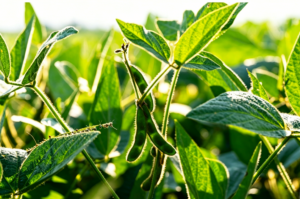
The bio-based plasticizer market was valued at approximately USD 1.94 billion in 2025 and is projected to reach USD 3.58 billion by 2035. The core production processes involve epoxidation and transesterification reactions, which convert the carbon-carbon double bonds present in vegetable oils—such as soybean oil—into epoxy groups. This chemical modification imparts enhanced thermal stability and plasticizing efficiency to the final product.
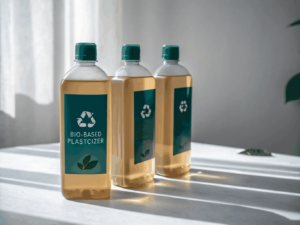
Epoxidized Soybean Oil (ESBO) currently represents the mainstream commercial product; however, its relatively low addition rate limits the scope of its applications. The industry is actively developing derivatives, such as epoxidized fatty acid isobutyl esters, to improve compatibility with various polymer matrices. Notably, the Shandong Energy Institute has established the world’s first kiloton-scale demonstration production line for aconitate ester-based plasticizers.
Emerging alternative feedstocks, including non-edible sources such as waste cooking oil and cardanol derived from cashew nut shell liquid, are being adopted to reduce production costs and enhance overall sustainability credentials. A thorough understanding of these process details enables procurement professionals to more accurately assess supplier capabilities and product quality.
PEEK Granules: From EV Lightweighting to High-Performance Material for Humanoid Robots
Polyether ether ketone (PEEK) granules are transitioning from a specialty material to a mainstream engineering plastic. The global market size was approximately USD 9.2 billion in 2025 and is expected to reach USD 18.7 billion by 2034, with a compound annual growth rate (CAGR) of 8.14%. Among industry users, 66% cite lightweighting as the primary adoption driver.
In the electric vehicle (EV) sector, PEEK components can replace metals to achieve weight reductions of up to 70%, and are widely used in battery brackets and sensor housings. The humanoid robotics sector is emerging as a new growth area, where PEEK demonstrates excellent tribological performance in harmonic drive gears and bearings.
The aerospace and medical implant markets continue to provide stable, high-end demand. Purchasers need to pay close attention to viscosity batch-to-batch consistency and supply chain traceability in order to navigate the rapidly evolving competitive landscape.
PEI Pellets: A New Engineering Plastic Choice for Medical and 5G Applications
Polyetherimide (PEI) pellets, with their excellent flame retardancy, dimensional stability, and biocompatibility, are becoming key materials for medical devices and 5G infrastructure. The global PEI market was valued at approximately $748 million in 2024 and is projected to reach $1.1 billion by 2030, growing at a compound annual growth rate (CAGR) of 6.4%.
Medical-grade PEI pellets meet FDA food contact standards, ISO 10993, and USP Class VI requirements. They are compatible with various sterilization methods including steam and gamma radiation, making them widely used in surgical instruments and pharmaceutical components. In the electronics sector, their superior dielectric properties make them an ideal choice for 5G connectors and sensor housings.
As regulatory scrutiny intensifies, sourcing PEI pellets with complete certification and traceability has become a competitive necessity. Capacity expansion by Chinese manufacturers is further enriching global supply chain options.
MCCP vs. LCCP: Navigating the Chlorinated Paraffin Shift in 2026
The chlorinated paraffin market is pivoting from SCCPs to MCCPs and LCCPs as global phase-outs take effect. The market, valued at $2.36 billion in 2025, is projected to reach $3.81 billion by 2032. MCCPs offer a balanced compliance and performance profile as the primary SCCP alternative.
MCCPs (C14–17) serve cable sheathing, footwear, and metalworking fluids with improved thermal stability. Regulatory pressure is intensifying: the EU expects to add MCCPs to POPs Annex I in 2026, Canada proposes bans on MCCPs and LCCPs (≤C20), and China is implementing national detection standards.
Procurement requires a dual-track approach: secure compliant MCCP/LCCP supply near-term while evaluating halogen-free flame retardants and bio-based plasticizers for long-term substitution. Proactive supply chain realignment will secure competitive advantage.