
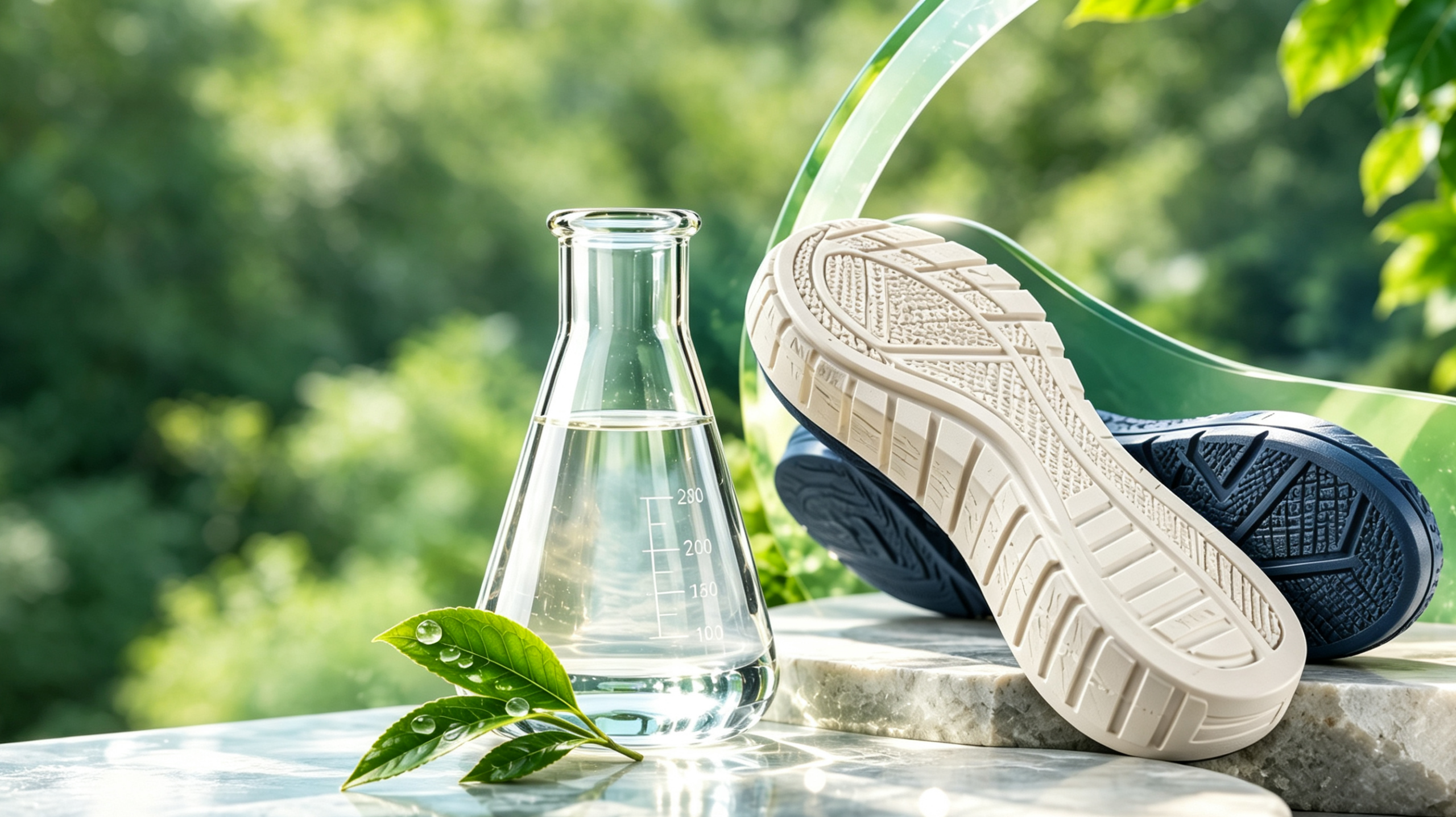
DOTP for PVC Shoe Soles: A Guide to Phthalate-Free Footwear Plasticizers
When used in PVC shoe soles, DOTP imparts flexibility and abrasion resistance comparable to DOP, yet migrates less into socks, adhesives, and packaging. Footwear manufacturers use it in injection-molded unit soles, calendered sheets for lamination, sandal straps, boots, and fashion footwear. Switching to DOTP plasticizer eliminates phthalate exposure while meeting REACH requirements, and typically requires no full reformulation.
Key Points
- DOTP sole formulations cover a wide range of products, from sandals and athletic shoes to boots and safety footwear.
- Structurally phthalate-free: as a terephthalate, DOTP complies with restricted substance list requirements.
- Low migration: footwear plasticizer selection favors DOTP for its low migration, low odor, and low fogging characteristics in finished footwear.
- Typical DOTP loadings in PVC footwear formulations are determined by target hardness and end use.
Why Footwear PVC Needs Phthalate-Free Plasticizers
According to the World Footwear Yearbook, global footwear production reached 22.4 billion pairs in 2023, and PVC remains a core material for economical, durable, and waterproof footwear. However, the phthalates historically used in PVC shoe soles—namely DEHP (DOP), DBP, and BBP—are now restricted in major markets. Footwear made with restricted phthalates faces border detention, customer returns, and reputational damage.
DOTP eliminates this exposure risk because it is not a phthalate. Its terephthalate structure falls outside the main phthalate restrictions while still delivering comparable plasticizing efficiency. As a result, footwear manufacturers can verify it through third-party testing and market their products as “phthalate-free.”
Performance of DOTP in PVC Shoe Sole Formulations
A typical PVC shoe sole formulation consists of PVC resin, DOTP, heat stabilizers, fillers, and lubricants. At equal loadings, DOTP provides plasticizing efficiency comparable to DOP, so switching requires no full reformulation; at the same time, its resistance to plasticizer migration into socks, adhesives, and packaging is superior to that of DOP.
Typical PVC Footwear Formulation
- PVC resin: suspension or emulsion grade, K value 65–70 (defined as 100 phr).
- DOTP footwear plasticizer: 50–90 phr, determined by target hardness and end use.
- Heat stabilizer: calcium-zinc or barium-zinc, 2.5–3.5 phr; calcium-zinc is preferred to meet brand requirements.
- Filler: calcium carbonate 10–30 phr, used to control cost and maintain dimensional stability.
- Lubricants, pigments, and blowing agents: for foamed microcellular midsoles, add azodicarbonamide.
Abrasion Resistance, Color Stability, and Processing Performance
DOTP also resists sole yellowing, a decisive appearance failure issue for white and translucent outsoles. Its UV stability, combined with non-phenolic stabilizer systems, helps light-colored footwear remain visually stable during retail display and consumer use. In injection-molded unit soles, DOTP’s lower melt viscosity helps shorten molding cycles at 170–190°C, improving production efficiency. For foamed PVC microcellular midsoles, DOTP maintains good compatibility with chemical blowing agents such as azodicarbonamide, helping to form a uniform cell structure.
How to SwitchPVC Shoe Sole Lines to DOTP
Most footwear formulators complete the conversion in five steps. The variables that determine success are DOTP loading, stabilizer compatibility, and the third-party testing protocol required by the target market.
- Review the current plasticizer system. Document the plasticizer type, phr loading, target hardness, stabilizer system, and export markets for each footwear formulation.
- Set DOTP loading based on target hardness. Use 80–95 phr for soft sandal straps and 55–70 phr for unit soles. Achieving equivalent hardness requires 2–5 phr more than DOP.
- Conduct laboratory-scale trials. Test gelation, melt viscosity, Shore A hardness, tensile strength, elongation, DIN abrasion (ISO 4649), and Rossflex flex resistance at −10°C.
- Verify through third-party testing. Screen for phthalates, elemental migration, and total fluorine. Retain reports for brand audits.
- Scale up production and secure supply. Convert line by line and sign supply agreements with DOTP producers.
Conclusion
For footwear manufacturers operating within phthalate restrictions, DOTP for shoe soles is a plug-and-play solution that meets all major global regulatory requirements while maintaining flexibility, abrasion resistance, and processing efficiency.