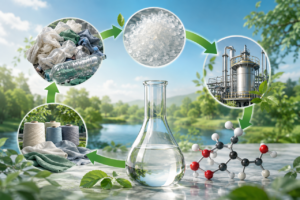

The bio-based plasticizer market was valued at approximately USD 1.94 billion in 2025 and is projected to reach USD 3.58 billion by 2035. The core production processes involve epoxidation and transesterification reactions, which convert the carbon-carbon double bonds present in vegetable oils—such as soybean oil—into epoxy groups. This chemical modification imparts enhanced thermal stability and plasticizing efficiency to the final product.
Epoxidized Soybean Oil (ESBO) currently represents the mainstream commercial product; however, its relatively low addition rate limits the scope of its applications. The industry is actively developing derivatives, such as epoxidized fatty acid isobutyl esters, to improve compatibility with various polymer matrices. Notably, the Shandong Energy Institute has established the world’s first kiloton-scale demonstration production line for aconitate ester-based plasticizers.
Emerging alternative feedstocks, including non-edible sources such as waste cooking oil and cardanol derived from cashew nut shell liquid, are being adopted to reduce production costs and enhance overall sustainability credentials. A thorough understanding of these process details enables procurement professionals to more accurately assess supplier capabilities and product quality.