Introduction
Long-chain chlorinated paraffins (LCCPs) are chlorinated hydrocarbons used in various industrial formulations. Depending on their chemical composition and grade, they can provide functions such as plasticization, flame retardancy, and improved material performance.
LCCPs are used in applications including plastics, rubber, coatings, sealants, and other industrial materials. However, their suitability depends on factors such as carbon-chain distribution, chlorine content, viscosity, compatibility, and the requirements of the final formulation.
This guide introduces the key technical properties of LCCPs, their common industrial applications, and the factors buyers should consider when selecting a suitable grade.
- What Are LCCPs?
Long-chain chlorinated paraffins are mixtures of chlorinated alkanes with relatively long carbon chains. They are generally distinguished from medium-chain chlorinated paraffins (MCCPs) by their carbon-chain distribution.
In commercial applications, LCCP grades may differ in carbon-chain length, chlorine content, viscosity, and other physical and chemical properties. These differences can influence their compatibility with other formulation ingredients and their performance in finished products.
Because product classifications and specifications may vary, buyers should always refer to the supplier’s Technical Data Sheet (TDS) and Safety Data Sheet (SDS) for the exact composition and product characteristics.
- Key Technical Properties of LCCP
Understanding the technical properties of LCCP is essential when evaluating its suitability for industrial applications.
Chlorine Content
Chlorine content is one of the key parameters used to characterize chlorinated paraffins. It can influence properties such as viscosity, compatibility, and flame-retardant performance.
Different formulations require different chlorine-content levels. Therefore, buyers should select a grade according to the technical requirements of their products rather than relying on chlorine content alone.
Viscosity and Density
Viscosity affects how LCCP flows, mixes, and is processed during manufacturing. Density is another important physical property that may influence formulation calculations and material handling.
Both parameters should be evaluated alongside the processing conditions and the requirements of the final application.
Thermal Stability
Thermal stability is important in industrial processes involving elevated temperatures. The performance of an LCCP grade should be assessed under the actual processing conditions, particularly when it is incorporated into PVC or other polymer formulations.
Physical Appearance and Compatibility
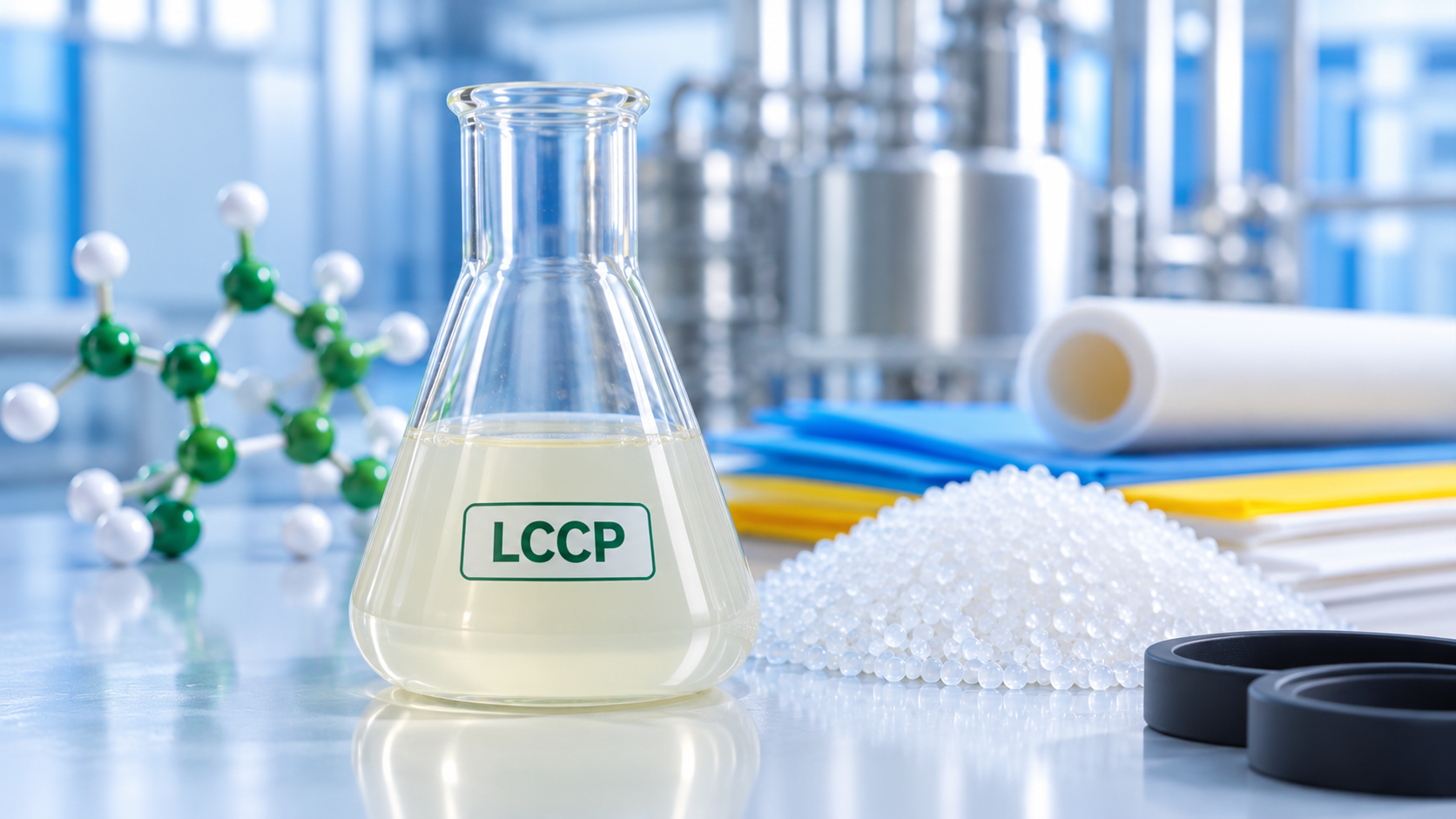
LCCP products are commonly supplied as liquids, with appearance and viscosity depending on the specific grade.
Compatibility with base polymers, plasticizers, and other formulation ingredients is also important. Testing within the intended formulation can help determine whether a particular grade is suitable for the application.
- Industrial Applications of LCCP
LCCPs are used in several industrial sectors. Their specific functions depend on the grade and formulation.
PVC and Plastic Formulations
Certain LCCP grades can be used as secondary plasticizers or functional additives in PVC formulations. They may contribute to formulation flexibility and flame-retardant performance, depending on the composition and application requirements.
Potential application areas include flexible PVC products, cable compounds, and other industrial plastic materials.
The appropriate grade and dosage should be determined through formulation trials to evaluate compatibility, processing behavior, and finished-product performance.
Rubber Industry
Selected chlorinated paraffin grades may be incorporated into certain rubber formulations as functional additives.
Their suitability depends on the rubber type, processing conditions, and required properties of the finished product. Compatibility testing is recommended before establishing a regular production formulation.
Coatings and Protective Materials
Chlorinated paraffins have been used in certain industrial coating formulations. Depending on the grade, they may contribute to flame-retardant properties and other formulation characteristics.
The final performance should be evaluated according to the coating system and applicable product requirements.
Sealants and Adhesives
Some formulations of sealants and adhesives may use chlorinated paraffins as functional additives. Their selection depends on compatibility with the other formulation components and the required properties of the finished material.
Manufacturers should conduct application testing before adopting a specific grade for production.
- Key Factors to Consider When Purchasing LCCP
Selecting an appropriate LCCP supplier involves more than comparing prices. Buyers should evaluate the following factors:
- Carbon-chain distribution: Confirm the carbon-chain range and product classification required for the intended application.
- Chlorine content: Check whether the specified chlorine content meets the formulation requirements.
- Viscosity and density: Review the physical properties to ensure they are suitable for processing and handling.
- Product documentation: Request the TDS, SDS, and available Certificate of Analysis (COA) to verify product specifications.
- Application suitability: Conduct laboratory or production trials to assess compatibility and performance.
- Supply consistency: Evaluate whether the supplier can maintain consistent specifications and reliable delivery.
Clear technical communication between the buyer and supplier can help reduce formulation risks and improve material selection.
- Understanding C18–C20 LCCP CP52
Re-Plastic Global supplies LCCP CP52 with a carbon-chain distribution of C18–C20 and a chlorine content of 52%.
This grade is intended for industrial applications where its physical and chemical properties meet the requirements of the formulation.
For buyers evaluating C18–C20 LCCP CP52, key considerations include chlorine content, viscosity, compatibility, processing conditions, and the requirements of the finished product.
We recommend reviewing the relevant TDS and COA and conducting application testing before confirming suitability for a specific production process.
- LCCP vs. MCCP: What Is the Difference?
LCCP and MCCP are classified according to their carbon-chain lengths. MCCPs generally refer to chlorinated paraffins with carbon-chain lengths of C14–C17, while LCCPs are associated with longer carbon chains.
Their differences in molecular composition can result in different physical properties and application characteristics.
When purchasing either material, buyers should confirm the exact carbon-chain distribution, chlorine content, and applicable regulatory requirements. Product names alone are not sufficient to establish composition or regulatory status.
Regulatory requirements for chlorinated paraffins vary by substance, market, and application. Buyers should check the latest requirements in the destination market and obtain the relevant product documentation before import or use.
- Frequently Asked Questions About LCCP
What does LCCP stand for?
LCCP stands for Long-Chain Chlorinated Paraffins, a group of chlorinated hydrocarbons used in various industrial formulations.
What is the difference between LCCP and MCCP?
The main distinction is their carbon-chain distribution. MCCPs generally contain C14–C17 carbon chains, while LCCPs have longer carbon chains. Their properties and regulatory requirements may differ.
What information should buyers check before purchasing LCCP?
Buyers should review the carbon-chain distribution, chlorine content, viscosity, density, TDS, SDS, and available COA. Application testing is also recommended.
Can LCCP be used in PVC formulations?
Certain LCCP grades may be used in PVC formulations as secondary plasticizers or functional additives. Suitability depends on the grade, formulation, processing conditions, and applicable regulatory requirements.
Conclusion
LCCPs are used in a range of industrial formulations, including plastics, rubber, coatings, sealants, and adhesives. Selecting the right grade requires careful evaluation of carbon-chain distribution, chlorine content, physical properties, compatibility, and application requirements.
Re-Plastic Global supplies C18–C20 LCCP CP52 with 52% chlorine content for industrial applications. We welcome inquiries from manufacturers and distributors seeking technical specifications and supply information.
Contact Re-Plastic Global to request the TDS and COA or discuss your LCCP requirements.