As the global demand for recycled PET (rPET) continues to increase, food safety has become a major concern in the plastic packaging industry. Recycled PET is widely used in textile and packaging applications, but when it comes into contact with food, stricter safety requirements must be met.
The European Union has established specific regulations to ensure that recycled plastics used in food-contact applications do not pose risks to human health.
Key EU Regulations for Recycled PET
One of the most important regulations is Commission Regulation (EU) 2022/1616, which specifically addresses recycled plastic materials and articles intended to come into contact with food.
It establishes requirements for recycling technologies, decontamination processes, production facilities, and the use of recycled plastics in food packaging.
It also works alongside Regulation (EU) No 10/2011, which sets safety requirements for plastic materials intended for food contact, including restrictions on substances that may migrate into food.
Why Is Food Safety Important for rPET?
During the recycling process, used PET bottles may contain unwanted substances from previous use, adhesives, labels, and other contaminants.
If these substances are not properly removed, they may affect the safety of the final packaging.
Therefore, food-contact rPET must undergo effective decontamination to reduce potential contamination to levels that do not endanger human health.
Main Requirements for Food-Contact rPET
Under EU regulations, several key factors must be considered:
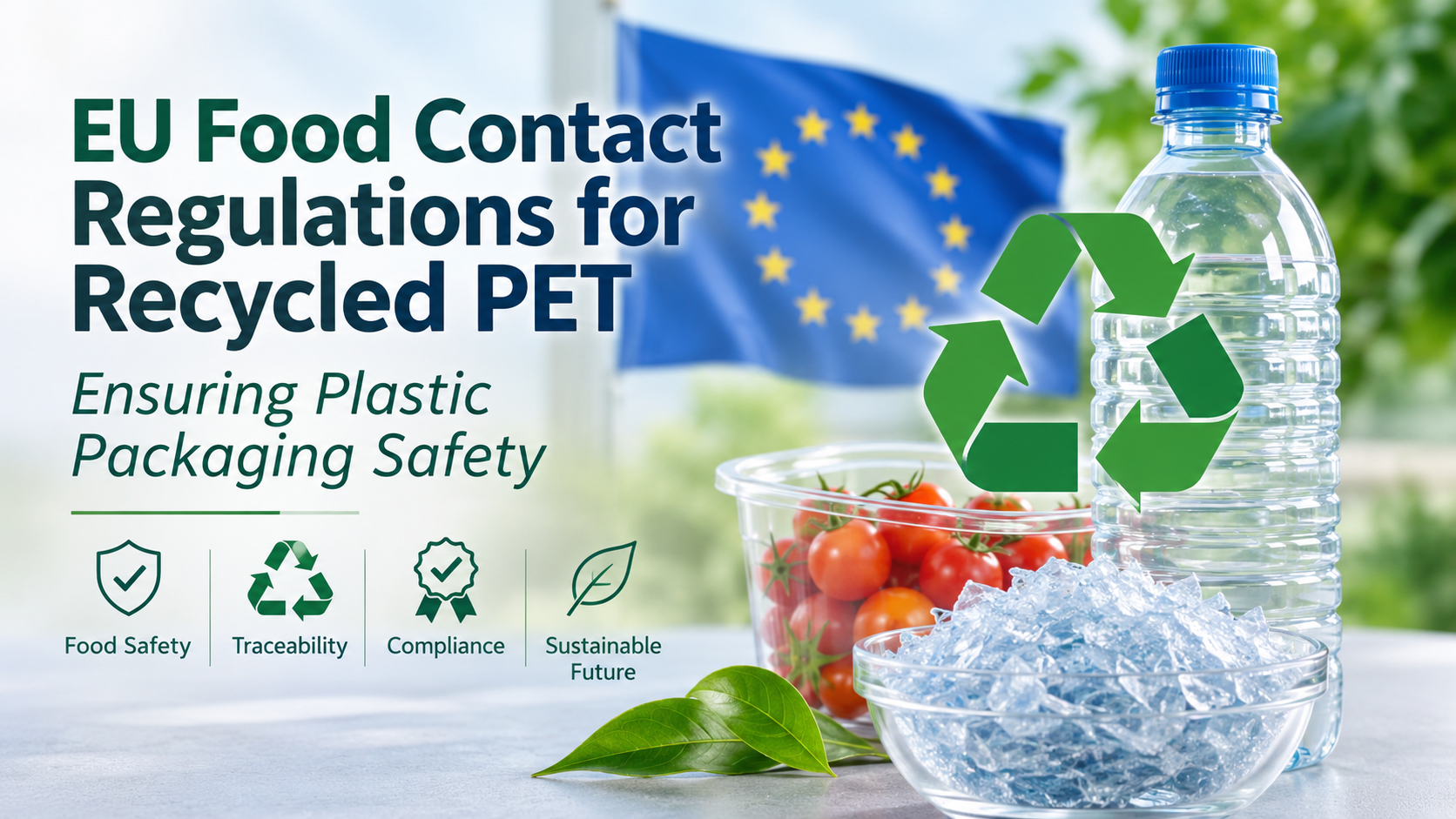
- RawMaterial Control: Recycled plastic waste must meet requirements for collection, sorting, and pre-processing.
- Decontamination: Approved or otherwise compliant recycling technologies and processes must effectively remove contaminants.
- Traceability: The origin, processing history, and relevant production information must be properly documented.
- Quality Management: Recycling facilities must maintain appropriate quality control and monitoring systems.
- Regulatory Compliance: Recycled materials and final food-contact products must meet applicable EU safety requirements.
What Should Buyers and Manufacturers Know?
Not all recycled PET flakes are suitable for food-contact applications. Ordinary rPET flakes cannot automatically be classified as food-grade material.
Buyers should verify the recycling process, relevant regulatory documentation, and the intended application of the final product.
It is also important to understand that compliance depends not only on the quality of the raw flakes but also on the subsequent decontamination, processing, and manufacturing stages.
The Future of Safe and Sustainable rPET
As food packaging regulations become increasingly strict, food safety, material traceability, and reliable recycling technologies will play an even more important role in the rPET industry.
Understanding these requirements helps manufacturers and buyers make informed decisions while supporting a safer and more sustainable plastics recycling system.
At Re-Plastic Global, we focus on supplying quality rPET flakes for various industrial applications. We believe that consistent material quality and responsible recycling practices are essential to the future of the circular plastics economy.