• Home
  • 行业趋势
  • PLA, PBAT, or PBS? How to Choose the Right Biodegradable Polymer for Your Business

PLA, PBAT, or PBS? How to Choose the Right Biodegradable Polymer for Your Business

As global environmental regulations tighten and consumer demand for eco-friendly packaging soars, the plastics industry is undergoing a massive transition toward biodegradable alternatives.

Among the various bio-based and compostable polymers on the market today, PLA (Polylactic Acid), PBAT (Polybutylene Adipate Terephthalate), and PBS (Polybutylene Succinate) have emerged as the three undisputed stars. However, for plastic manufacturers, compounders, and purchasing managers, navigating their technical differences, processing challenges, and cost structures can be tricky.

In this article, we explore the distinct characteristics, applications, price dynamics, and blending strategies for these three polymers to help you make informed sourcing decisions.

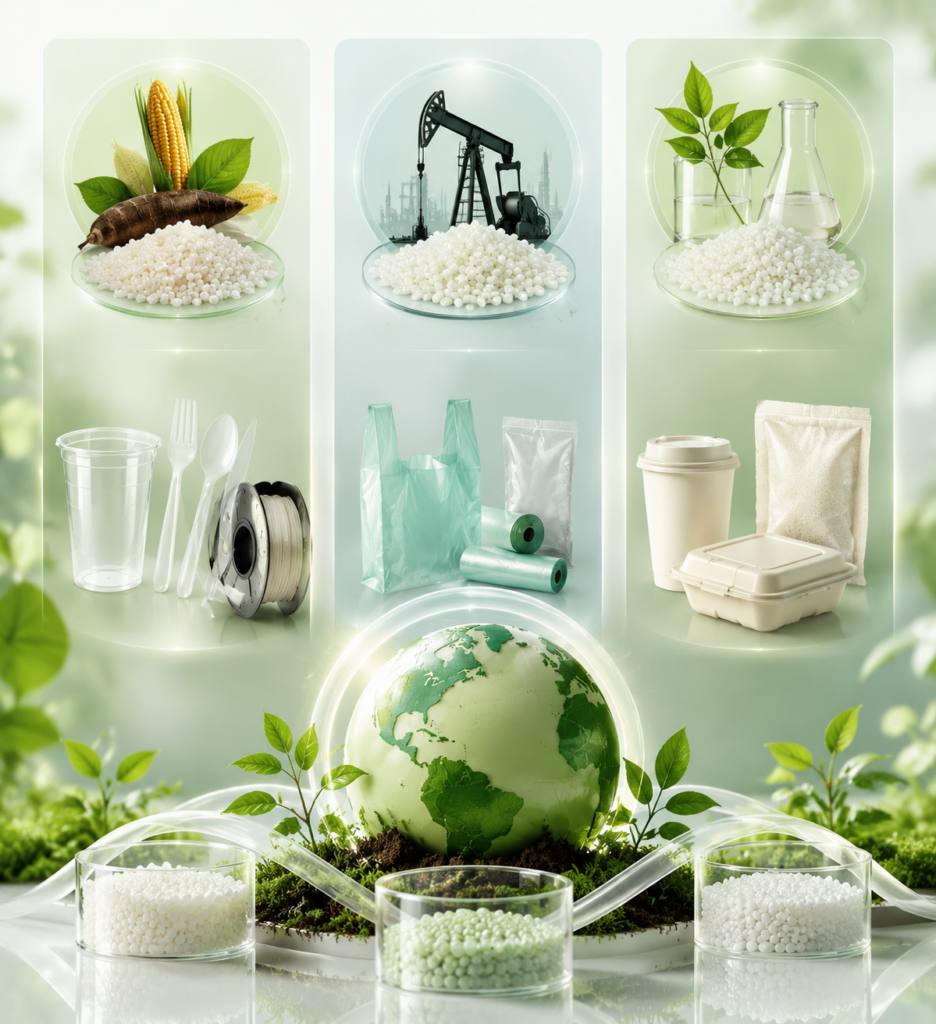
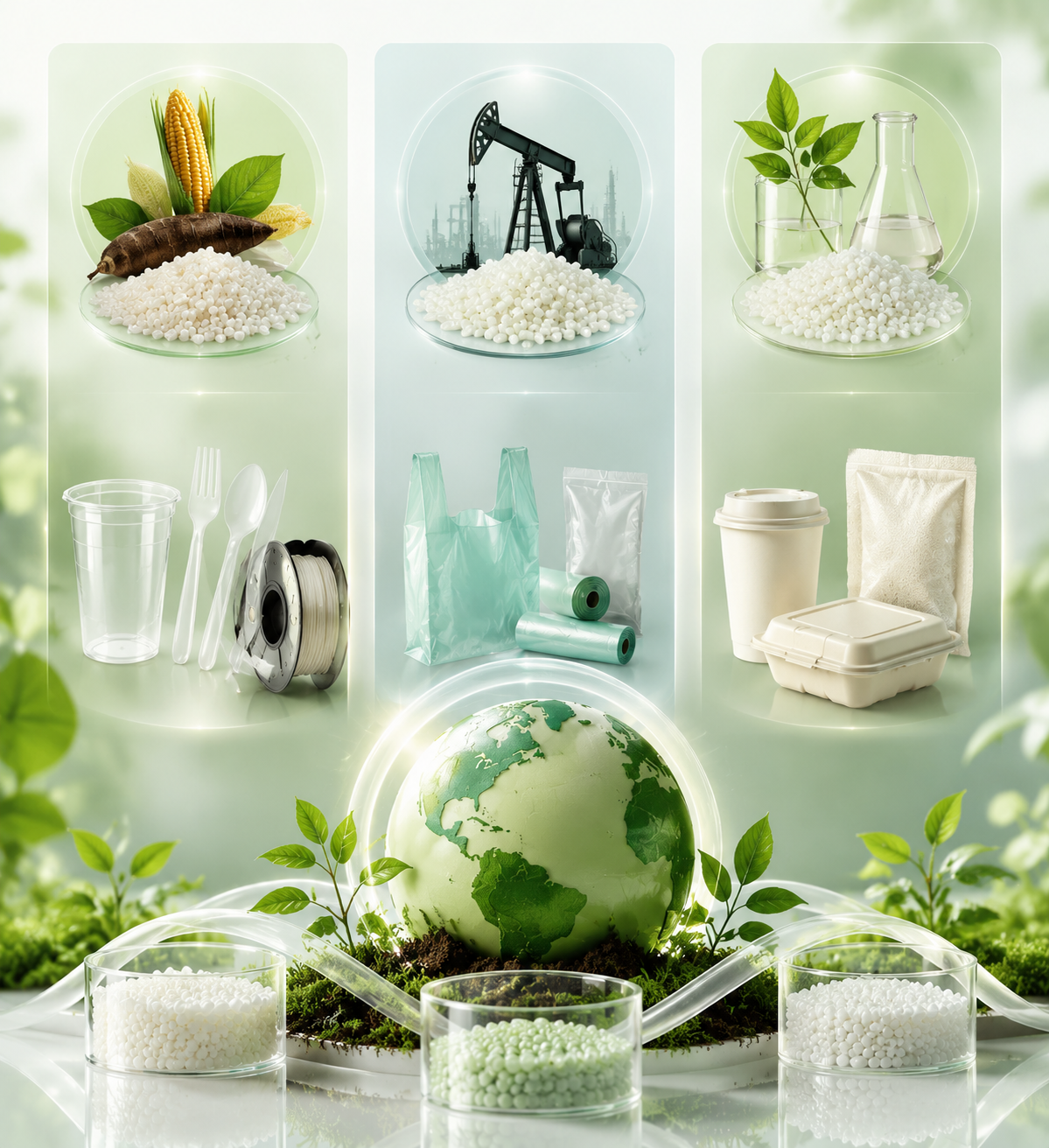
The current image has no alternative text. The file name is: 博客.png

1. Understanding the Physical Properties and Applications

While all three materials fully degrade into water and carbon dioxide under standard composting conditions, their raw material sources and mechanical behaviors vary significantly.

Polylactic Acid (PLA) is a 100% bio-based polymer derived from renewable plant starches such as corn and cassava. It is renowned for its high rigidity, excellent tensile strength, and crystal-clear transparency. However, its primary drawback is its inherent brittleness and poor impact resistance. Because of its glass-like clarity and firmness, PLA is widely utilized in rigid packaging, disposable cutlery, cold beverage cups, and 3D printing filaments.

Polybutylene Adipate Terephthalate (PBAT), on the other hand, is a petroleum-based fully biodegradable polyester. Unlike rigid PLA, PBAT is exceptionally soft and flexible, offering extraordinary elongation at break and superior tear resistance, though its overall tensile strength is relatively low. Due to these rubber-like mechanical properties, PBAT is the material of choice for flexible film applications, including shopping bags, express mailing envelopes, agricultural mulch films, and packaging wraps.

Polybutylene Succinate (PBS) can be produced from either bio-based or petrochemical feedstock. It occupies a balanced middle ground between PLA and PBAT, providing a good combination of toughness and mechanical strength. What truly sets PBS apart is its remarkable thermal resistance, capable of withstanding temperatures exceeding $$100^\circ\text{C$$. This high heat deflection temperature makes PBS ideal for hot beverage lids, microwaveable food containers, catering boxes, and medical non-woven fibers.

2. The Science Behind Polymer Blending

In practical industrial processing, manufacturers rarely rely on a single 100% pure polymer. Instead, blending these materials together is the standard practice to offset individual material weaknesses and optimize performance.

The combination of PLA and PBAT represents the most popular synergy in the flexible packaging industry. Because pure PLA is too brittle for thin films and pure PBAT is too soft to hold structural shape, compounding them creates a balanced resin that possesses both high tensile strength and excellent flexibility. This blend is what powers most certified compostable shopping bags and courier sacks on the market today.

Similarly, PBS is frequently blended with PLA to resolve PLA’s heat sensitivity. Pure PLA begins to soften and deform at temperatures above $$55^\circ\text{C$$, rendering it unsuitable for hot food contact. By introducing PBS into the matrix, formulators significantly boost the thermal deflection temperature of the final product, enabling its use in hot coffee cups and takeout packaging.

3. Market Pricing and Economic Logic

From an economic perspective, understanding the cost hierarchy helps procurement managers optimize raw material budgets. In the global market, the price hierarchy generally follows the pattern of PBAT being the most economical, PLA occupying the mid-range, and PBS commanding a premium price.

PBAT currently enjoys the lowest entry cost among the three. Backed by mature petrochemical supply chains and substantial global manufacturing capacity, PBAT production has achieved high economies of scale. This makes it an affordable, cost-effective foundational resin for flexible film compounding.

PLA sits in the mid-price tier. Its price is primarily driven by the technological complexity of synthesizing its key precursor, lactide, as well as agricultural commodity prices like corn starch. While its manufacturing barrier remains higher than traditional petrochemicals, expanding production scale globally has kept PLA prices relatively stable and accessible.

PBS is the most expensive of the three options. Its higher price stems from the complex chemical synthesis required for succinic acid and BDO, combined with smaller global production volumes. As a result, PBS is generally selected for specialized applications where high heat resistance is strictly necessary.

4. Enhancing Processing Stability with Bio-Based Additives

Processing biodegradable polymers requires careful thermal management. Materials like PLA and PBAT are sensitive to thermal degradation and moisture during extrusion, which can lead to molecular weight loss and reduced mechanical strength.

To counter this, leading formulators incorporate specialized eco-friendly additives into their blends. For instance, Bio-based Epoxidized Soybean Oil (ESBO) functions as an effective secondary heat stabilizer and plasticizer. It helps capture free radicals and degradation byproducts during high-temperature compounding, ensuring smooth melt processing and improving the long-term flexibility of the finished product.

分享此帖

订阅我们的新闻简报

关注我们的博客,即可获取最新文章。我们承诺绝不发送垃圾邮件。
点击“注册”即表示您同意我们的条款和条件。

相关文章